Last week, Treasury Secretary Scott Bessent announced an intervention in the long end of the U.S. Treasury curve, increasing buybacks from $2 billion to $4 billion and suggesting there could be more, if necessary. U.S. debt yields were climbing in the weeks leading up to the announcement and dipped afterward. Yields traced back up until news leaked that additional buybacks could be funded through the Treasury’s General Fund, which has nearly a trillion in cash. Treasury buybacks are typically used to enhance liquidity in certain circumstances (March 2020 being one of them); Bessent, however, noted it was more to keep long end interest rates low. Bessent Bond Buybacks Could Increase Further | Reuters
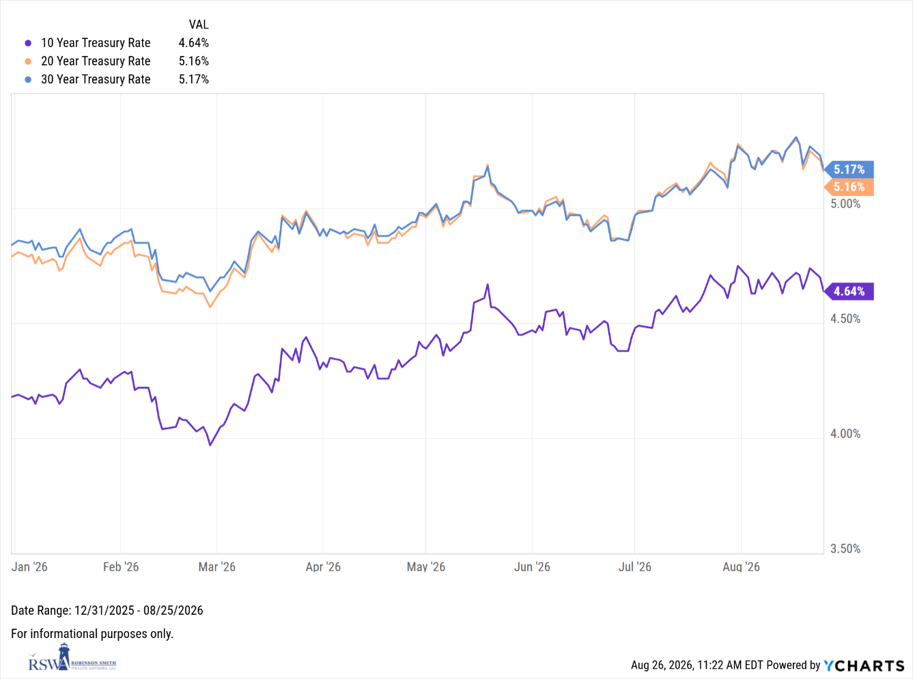
On Tuesday, Bessent’s former colleague and mentor, Stanley Druckenmiller authored (proudly with the help of AI!) a Wall Street Journal opinion piece that the Treasury’s attempt to control interest rates would be possible in the short-term but in the long run, if the market demands higher interest rates, higher rates will prevail and possibly cause more pain along the way. Let the Bond Market Speak | WSJ
In a world of AI and changes to how we receive media and communicate, it’s funny to think that 250 years ago, the year of our nation’s founding, newspaper Op-Eds were used by Founders in much the same way as they are today to persuade and shape policy.
Overall, the amount of corporate debt issued for the AI buildout has been a major factor in rising interest rates. With the volume of the U.S. and other governments borrowing and running budget deficits, it’s prompting debt investors to demand higher interest rates.
Core PCE Data Release and Nominal GDP: The Federal Reserve’s preferred measure of inflation, Personal Consumption Expenditures (PCE), came in a little higher than anticipated in July, with headline inflation rising 0.2% for the month and 3.7% year-over -year. Removing food and energy, the measure was up 0.2% for the month and 3.3% for the year. July 2026 PCE Inflation Data | Yahoo Finance
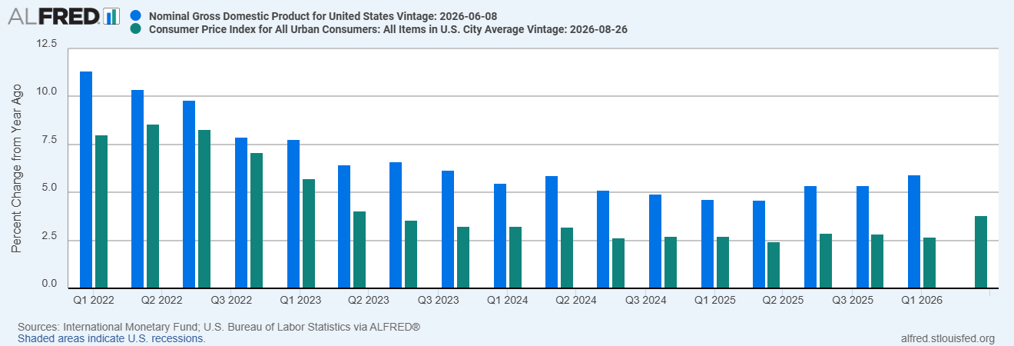
When looking at gross domestic product (GDP), analysts typically look at Real GDP (excluding inflation). But Nominal GDP (including inflation) is an interesting measure as well. In the chart below, you’ll see the blue bars as quarterly year-over-year Nominal GDP compared to the green bars of quarterly year-over-year headline CPI. Nominal GDP is above or near 5% GDP growth since 2022:
This is a very different decade so far compared to the 2010s when Nominal GDP only exceeded 5% a few times:
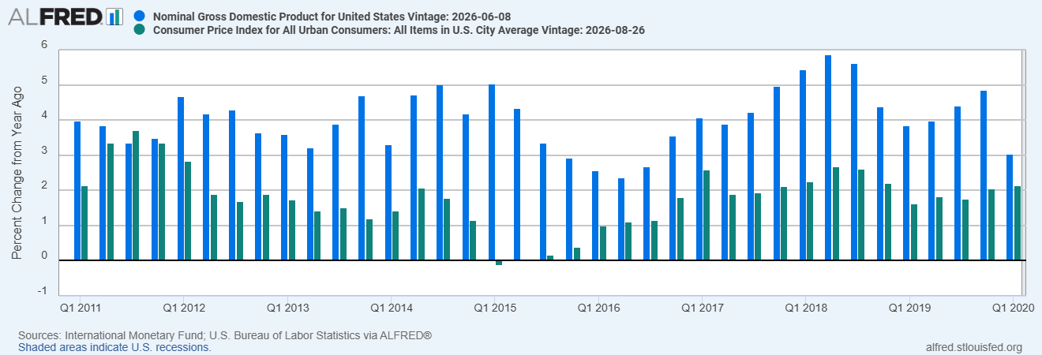
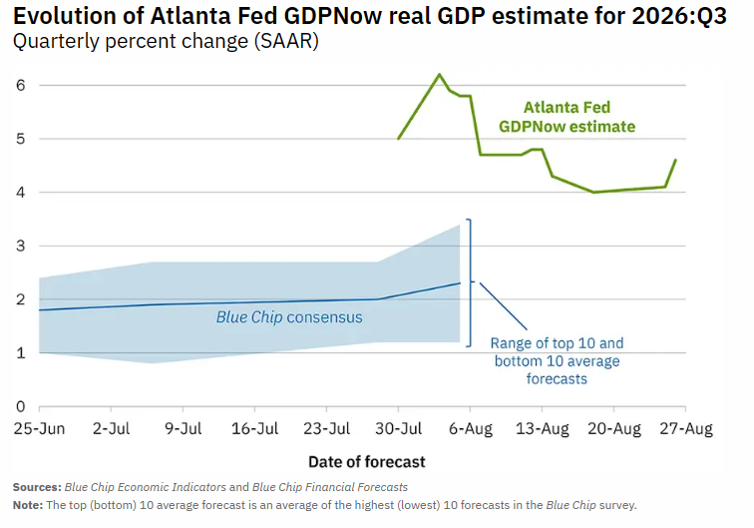
Inflation has been higher in the 2020s compared to the 2010s, so Real GDP is tracking similarly between the two decades at between 2-2.5%. Nominal GDP shows there is a lot of economic activity occurring, keeping inflation higher. The Atlanta Fed’s GDPNow Real GDP estimate for Q3 2026 is 4.6%, so we could see a Nominal GDP over 7% or 8% with current inflation data:
Financial Planning/Investment Strategy Corner:
Timing your Required Minimum Distributions (RMD): Individuals with tax-deferred retirement accounts (i.e. 401ks and IRAs) will, at some point, be required by the IRS to take money out of the account. The required amount to take is based on a formula using your age and the balance in your account as of 12/31 of the prior year. Then, Individuals are required to take that amount out of the account before the end of the year. What some clients have posed to us is whether the time of year (beginning, monthly throughout, or year-end) matters. Morningstar went through the pros and cons of each approach: Retirees: Should You Take RMDs Early in the Year or Wait? | Morningstar. Largely, it comes down to whether you need the funds for day-to-day expenses. If you do not need the funds and you are reinvesting them in a taxable account, it could benefit you to continue tax-deferred growth in the IRA or 401k. The opposite is the case if the market goes down, where you now have less money to meet your RMD but are still required to take it. Here at RSWA, we tend to work with clients to maintain a cushion within accounts in either bonds or cash to meet a year or two of required distributions to avoid any issues.
Quick Hits:
- This was a fun read on: A Brief History of Hold Music| Smithsonian
- Another perk to taking vacations and time away: Mental Health Benefits of Travel: How Vacations Reduce Stress | WSJ
- A good interview with Ken Burns: Ken Burns on What He Will and Won’t Allow When Financing His Films | Barron's
- These were interesting quotes by Dolly Parton: The Dolly Parton You May Not Know | AP News
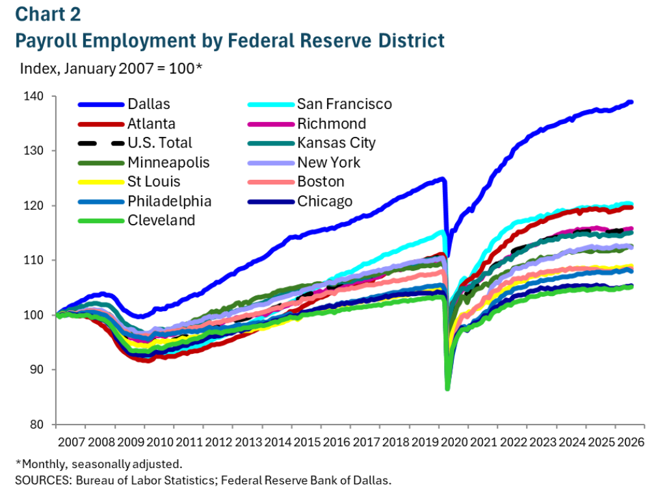
Growth in Employment by Federal Reserve District:
The U.S. Federal Reserve is divided up into twelve different districts. The sheer employment growth in the Dallas Federal Reserve District, particularly since 2020, is astounding compared to the rest of the country (chart below). With all of the growth though, it only makes up 10% of the overall employment share still: Employment by Federal Reserve District | Dallasfed.org
Quote: “If your actions create a legacy that inspires others to dream more, learn more, do more and become more, then, you are an excellent leader.” – Dolly Parton
Thank you for reading RSWA Financial Advisor Insights! We welcome feedback, and please forward this to a friend! Be well, take care, and stay safe!