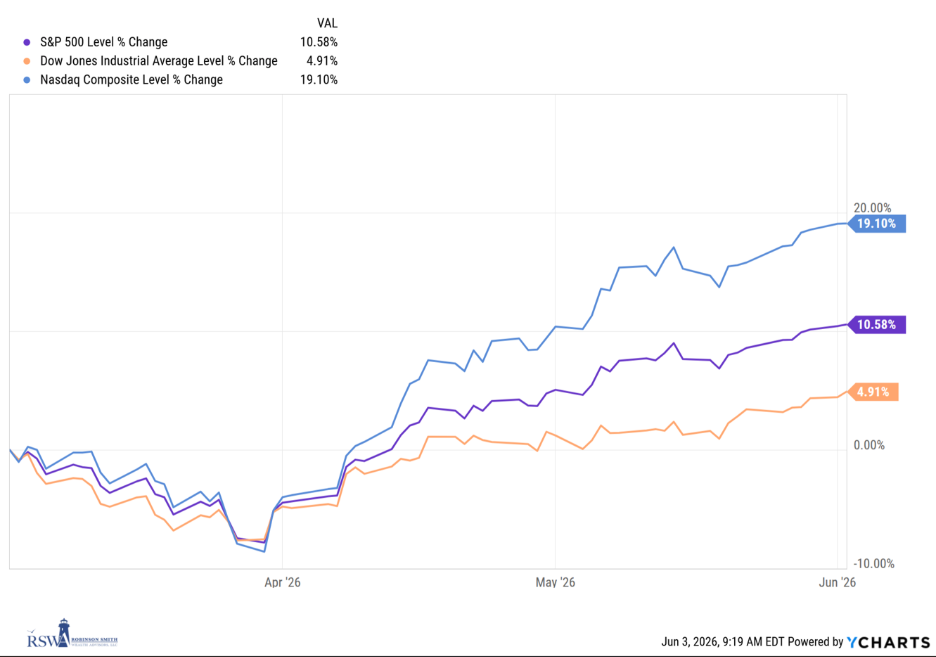
With 97% of companies in the S&P 500 having reported first quarter earnings results as of the end of last week, earnings on a year-over-year basis are up close to 29%. This would be the highest earnings growth rate in a quarter since the fourth quarter of 2021. Even analyst estimates that were revised higher at the end of March weren’t optimistic enough. While it would be difficult for that pace of earnings growth to continue, analysts still expect earnings growth of 20%+ (year-over-year) for the next several quarters. Estimates like these, if they come to fruition, paint an extremely healthy backdrop for this resilient market to continue grinding higher. Below is the performance of the major U.S. indices over the last 3 months:
Kevin Warsh’s Term Begins
One of the more respected, measured voices I closely pay attention to is former Federal Reserve Vice Chairman Roger Ferguson. He wrote a thoughtful piece on what Americans can expect in the first 100 days of new Fed Chair Kevin Warsh’s tenure: What to Expect From Kevin Warsh’s Fed in the First 100 Days | Council on Foreign Relations
Financial Planning Corner
A headline that grabbed my attention in the last few days was from the Wall Street Journal - Americans Are Falling Behind on Their $1.25 Trillion Credit-Card Bill - WSJ. The article cited that in the first quarter of 2026, credit-card balances that were at least 90 days delinquent (failing to meet the minimum payment) rose to 13.12%, according to data released by the Federal Reserve Bank of New York. This is the highest level since The Great Financial Crisis. There are numerous books on the psychology of money and how our brains are wired, and why we spend money that we don’t have (not doing a good job at controlling the controllable). Other times, you seem to be doing everything right, and then one setback starts a dangerous domino effect. Consequently, national credit counseling agencies have seen a significant increase in the number of people at their classes. The National Foundation for Credit Counseling, a network of nonprofits that helps people reduce credit-card debt, said it had 24% more clients in January 2026 than in the same period in 2025. While it can be hard to ask for help, it’s the first step towards change and progress. Large credit card balances probably do not affect most of our clients, but it may affect someone close to them (kids, siblings, etc.) Some avenues to pursue to help dig yourself out of the hole you may be in:
- Negotiate with your credit card company – some are willing to lower your interest rate or restructure your payment plan.
- Find a reputable credit counseling program that will spend time with you to truly understand your situation and develop a game plan to get you on the right track.
- Prioritize paying off debt – this sounds obvious - but keep it top of mind.
Homeowner’s Insurance -Potential Ways to Lower Your Premiums
The cost of homeowner’s insurance has skyrocketed over the last 5 years, well outpacing the general rate of inflation (as measured by CPI). The main reason for the increase is the rise in natural disasters (hurricanes, fires, etc.), and the increasing cost of repairing and rebuilding homes. Colorado, Utah and Nebraska saw some of the largest increases, with the smallest increases experienced in Vermont, Alaska and Maine (😊). Some actions homeowners can take to lower premiums - How to reduce your homeowners insurance premiums
Quick Hits:
- 2026 World Cup is a week away – why FIFA is being subpoenaed by multiple states: How FIFA’s Biggest World Cup Unleashed a Summer of Price Gouging - WSJ
- As an avid college sports fan, something must be done about the current NIL environment – a bipartisan bill that is worth paying attention to: Bipartisan college sports bill proposes salary cap, transfer limit - ESPN
- Not a headline you see every day- Meteor explodes off coast of Massachusetts, causing loud boom - CBS Boston
- Building off last week’s newsletter, not to mention we have had several clients ask: FTSE Russell Eases U.S. Index Rules for SpaceX and Other Megacap IPOs - WSJ
Quote: “Life is about the good and the bad. Good is easy. Bad is hard. Finding a way to make good from the bad is the secret. The few who discover the ability within themselves – nothing can stand in their way of happiness.” – Landon Parham
Thank you for reading RSWA Financial Advisor Insights! We welcome feedback, and please forward this to a friend! Be well, take care, and stay safe!