Over the weekend, tensions between the US and Iran escalated, with US and Israeli forces striking targets inside Iran. Iran then launched retaliatory missile and drone strikes across the region.
With these events unfolding over the weekend, investors waited anxiously for markets to open on Monday to assess the damage. The result? Relatively minor. As of Wednesday morning, the S&P 500 is just 2% below its all-time high, and international stocks, represented by the MSCI EAFE Index, are about 5% below their all-time high.
So why such a small reaction to such significant news? Historically, this is how markets tend to respond. Some volatility and uncertainty in the short term, followed by limited long-term impact.
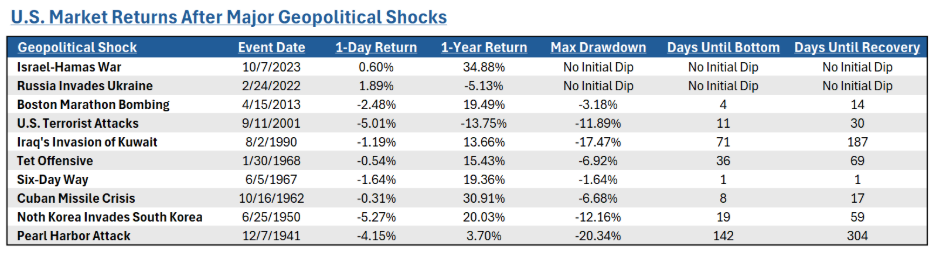
Data from First Trust Portfolios. Returns based on large-cap US stock market performance.
The table above highlights major geopolitical shocks dating back to the bombing of Pearl Harbor, showing the market’s 1-day and 1-year reactions, the maximum drawdown, the time it took to reach the bottom, and the time to recover to pre-conflict levels.
As shown, one-day reactions are typically negative (to be expected), and drawdowns can be significant. However, recoveries are generally fairly quick, and in most cases, markets are higher one year after the conflict begins.
Oil Market Response
The largest economic implication of this conflict revolves around oil. Iran is a major supplier, and a significant portion of global oil production flows through the Strait of Hormuz. Any disruption there can influence prices.
This has been reflected in oil prices, which have risen nearly 30% since the start of the year. Where prices go from here remains uncertain. Some expect oil to move north of $100 per barrel, while others believe increased supply and diplomatic stabilization could limit further upside. WSJ
In the short term, higher oil prices impact American consumers directly through gasoline and other energy related costs. With the Federal Reserve still battling inflation, renewed concerns about energy costs are likely to be top of mind. CNBC
Chart of the Week:
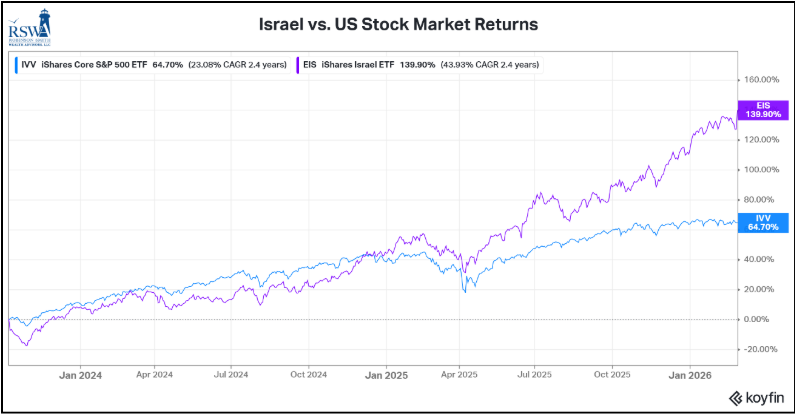
To continue to build off of points made above, many investors assume wars and geopolitical conflicts automatically lead to immediate and lasting declines in stock returns. While these events often create short-term volatility, markets do not move based on headlines alone.
Israel offers a recent example. Despite being at war for nearly two and a half years and at the center of tensions involving Iran, its stock market, represented by the iShares Israel ETF, has more than doubled the performance of the US market, as measured by the iShares S&P 500 Index, since October 7, 2023. It is just one example, but it underscores an important point: economies and corporations are dynamic, and conflict does not automatically determine long-term investment outcomes.
Financial Planning Corner:
True Up Your 2025 Retirement Contributions
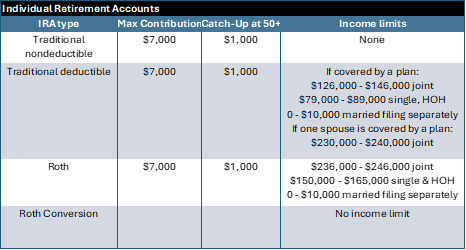
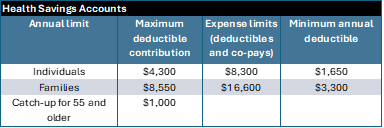
Although we're over two months into 2026, there's still time for your 2025 self to help your future self! Until the tax filing deadline on April 15, 2026, individuals can contribute to their IRAs and Health Savings Accounts for the 2025 tax year. This is a great opportunity to review your eligibility and maximize your savings. Each account type has specific contribution and income limits, so consult your tax preparer or financial advisor to ensure you're making the most of these benefits.
Here is a summary of contribution and income thresholds for the 2025 tax year:
Self-employed individuals and small business owners should take the time to review and maximize their contributions to retirement plans such as SEP IRAs, Solo 401(k)s, and pension plans.
Quick Hits:
- The traditional 9-to-5, Monday-to-Friday doesn’t work for everyone. Here are some ways to rethink the workweek WSJ
- Need some travel inspiration? Here are the 50 best places to visit in 2026 Travel + Leisure
- What to know before asking AI for health advice AP News
- For our bird-watching clients: a new study suggests the hobby may help build better brains CBC
- With a national title on the line, lead runners were guided off course at the US Half Marathon Championship The Athletic
The 0.01% Rule
I recently finished The Wealth Ladder by financial writer Nick Maggiulli. In the book, Maggiulli divides wealth from $10,000 to $100 million into six distinct levels. As individuals move up the wealth ladder, their goals and priorities evolve, and their financial strategies should evolve with them. My favorite takeaway, however, is not a strategy at all, but a guide for worry-free spending. He calls it the 0.01% rule.
The premise is simple. Any expense that equals 0.01% or less of your net worth is not worth stressing over. For example, if your net worth is $2 million, including investments, real estate, and other assets minus debt, 0.01% equals $200. In that case, a $200 expense should not require overthinking or second guessing.
The goal isn’t to encourage unnecessary spending, but to eliminate anxiety around small indulgences. Out to dinner and want dessert? Get it. Booking a long flight and want extra legroom? Upgrade. If the cost falls within that 0.01%, make the purchase and enjoy it.
Quote: “Wealth isn’t about the money you’ve accumulated, but the life you’ve built with it.” – Nick Maggiulli
Thank you for reading RSWA Financial Advisor Insights! We welcome feedback, and please forward this to a friend! Be well, take care, and stay safe!